
WELCOME BONUS 300%
UP TO €2000 + 100
FREE SPINS
UP TO €2000 + 100
FREE SPINS
Home → Blackjack
Blackjack at Mega Medusa Casino: Variants, Rules and Payouts
Clicked Too Late: Hand Is Automatically Held
In some Blackjack variants, the player's hand is automatically held if the player attempts to click 'Hit' after the dealer has checked for Blackjack. This rule can be found in variants such as Blackjack 6 Decks, S17, DAS, DOA, 3:2 Payout, where the house edge is 0.46%. This means that the player cannot make a strategic decision after the dealer's check, potentially leading to a missed opportunity to improve their hand.
The Blackjack 6 Decks, S17, DAS, DOA, 3:2 Payout game states that the player's action is final after the dealer's check. This specific rule modification, while not directly altering the RTP from its base of 99.54%, impacts the player's control over their hand. The absence of a 'hit' option in this scenario can be a disadvantage, particularly if the dealer reveals a strong starting hand.
For players who rely on the ability to adjust their strategy mid-hand, this automatic hold can represent a loss of potential winnings. The consequence is that if a player's initial hand is poor and they would have benefited from hitting, they are instead forced to play out the hand with their current cards, potentially increasing the house edge on that specific play.
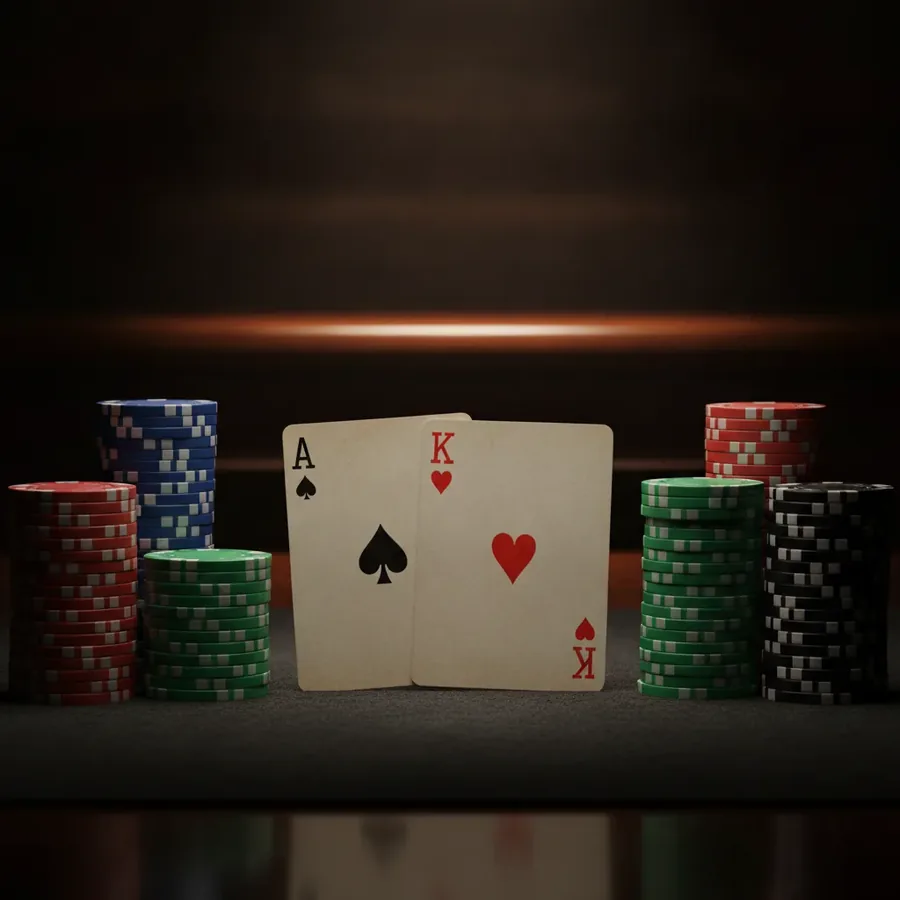
Split, Double Down, and Surrender in Numbers
The Blackjack Liberal Vegas Strip variant, with an RTP of 99.72% and a house edge of 0.28%, allows for doubling down after splitting (DAS). This rule enhances the player's advantage by approximately 0.14 percentage points compared to tables where it is not permitted. The ability to double down after a split provides more strategic options for the player.
Another rule that affects player strategy is 'Late Surrender' in Blackjack Surrender, which improves the RTP by approximately 0.08 percentage points. This allows players to forfeit half their bet after the dealer checks for Blackjack, a valuable option that reduces potential losses. However, 'Early Surrender' is significantly more beneficial but rarely offered.
The option to split cards and then double down is present in Blackjack 6 Decks, S17, DAS, DOA, with DAS reducing the house edge by 0.14 percentage points. In contrast, 'Hit Soft 17' (H17) increases the house edge by 0.22 percentage points. These rule variations demonstrate how specific player options can shift the advantage between the player and the casino.
What Percentage Does Blackjack Count Towards Bonus?
Blackjack games contribute 10% towards the wagering requirements of the welcome bonus. For instance, a 300% welcome bonus up to €2,000 means a player depositing €666.67 would receive the maximum bonus of €2,000. To meet the wagering requirements on this bonus, bets placed on blackjack would count at a tenth of their value.
This means that for every €100 wagered on blackjack, only €10 would count towards the total turnover requirement. Therefore, a player aiming to clear a substantial bonus amount would need to place significantly more wagers on blackjack compared to slots, which contribute 100%. This differential weighting is a common practice in online casino bonus structures.
The effective wagering requirement for blackjack is thus ten times higher than for slots. If the wagering requirement is, for example, x40 the bonus amount, a player would need to wager €80,000 on blackjack to clear a €2,000 bonus, whereas only €8,000 would be required on slots. Players should be aware of this contribution rate when planning their bonus play.
What doesn't count as Blackjack after Split?
In standard Blackjack rules, a player achieving a score of 21 with two cards after splitting a pair of Aces is not considered a 'Blackjack'. This is a crucial distinction that can impact payouts, as a natural Blackjack typically pays 3:2. This rule is generally applied across various Blackjack tables, including those with different deck counts or specific rule variations.
While the exact wording might differ slightly between game providers, the principle remains consistent: a two-card 21 formed after a split, even if it includes an Ace and a ten-value card, is treated as a regular 21, not a Blackjack. This means it pays out at the standard 1:1 rate, rather than the more favorable 3:2 ratio. This rule is a common feature in games like Blackjack 6 Decks, S17, DAS, DOA.
For players, this means that splitting Aces and then drawing a 10-value card, while resulting in a strong hand of 21, will yield a lower payout than if they had been dealt a natural Blackjack from the outset. This rule aims to maintain the house edge by preventing players from achieving a high payout on a hand formed through a split, particularly in scenarios where splitting Aces is permitted.
Ignored Basic Strategy Chart: 1 Percent Wasted
Adhering to basic strategy in Blackjack is crucial for minimizing the house edge, with optimal play achieving an RTP as high as 99.54% in variants like Blackjack 6 Decks, S17, DAS, DOA. Deviating from this strategy can increase the house advantage by approximately 1%, meaning that for every €100 bet, an extra €1 is lost on average over the long term.
For example, the Blackjack 6 Decks, S17, DAS, DOA, 3:2 Payout game, when played with basic strategy, offers a house edge of 0.46%. However, if a player consistently makes incorrect decisions, such as hitting on a hard 17, this advantage can shift significantly in favor of the casino. The RTP can drop by around 1% if basic strategy is ignored.
The consequence of not using a basic strategy chart is a tangible reduction in potential winnings. Over thousands of hands, this 'wasted' 1% can amount to substantial losses. For instance, a player betting €10 per hand over 1,000 hands would see an additional €100 in house edge if they deviate from optimal play, impacting their overall return.
Blackjack variants at a glance
| Variant | Payout | House edge | Rule | Bet range |
|---|---|---|---|---|
| Blackjack Split / Double / H17 – Regel-Effekte | n.a. (Regel-Modifikatoren) | H17 +0.22 Prozentpunkte; RSA −0.08 Prozentpunkte; DAS −0.14 Prozentpunkte | Dealer Hits Soft 17 verschlechtert RTP um 0.22 Prozentpunkte; Resplit Aces verbessert um 0.08 Prozentpunkte; Double After Split verbessert um ca. 0.14 Prozentpunkte; 6 Decks statt 8 – ca. 0.02 Prozentpunkte. | Double – Einsatz ×2 mit einer Karte; Split – bis 4 Hände; Ass-Split meist mit einer Karte. |
| Blackjack Auszahlung 6:5 statt 3:2 (6 Decks) | 98.15% | 1.85% | Ersatz von 3:2 durch 6:5 fügt exakt +1.39 Prozentpunkte zum Vorteil des Casinos hinzu – stärker als jede andere Regeländerung. Bei $10 Einsatz zahlt Blackjack $12 statt $15. | Blackjack 6:5, Gewinn 1:1 |
| Blackjack Liberal Vegas Strip (liberale Regeln, 3:2) | 99.72% | 0.28% | Günstigste Regelkombination: S17 + DAS + Resplit + Late Surrender. Standardabweichung 1,15 | Blackjack 3:2, Gewinn 1:1 |
| Blackjack Ein Deck, klassische Regeln, 3:2 | 99.85% | 0.15% | Weniger Decks = niedrigerer Vorteil; ein Deck gibt ca. −0.48 Prozentpunkte gegenüber 8 Decks. Oft durch 6:5 Auszahlung kompensiert. | Blackjack 3:2, Gewinn 1:1 |
| Blackjack Insurance / Versicherung (6–8 Decks) | 92.53% | 7.47% | Separate Nebenwette bis 50% der Hauptwette, wenn der Dealer ein Ass hat. Basisstrategie schreibt IMMER Ablehnung vor (außer Karten zählen bei True Count ≥ +3). Bei einem Deck Vorteil ≈ 5.88% | Insurance 2:1 |
| Blackjack Surrender (Late Surrender) – Regel-Effekt | n.a. (Regel-Modifikator) | −0.08 Prozentpunkte | Spieler gibt Hand nach Dealer-Blackjack-Prüfung auf, verliert die Hälfte des Einsatzes. Verbessert RTP um ca. 0.08 Prozentpunkte. Early Surrender ist wesentlich wertvoller (bis −0.6 Prozentpunkte), aber extrem selten. | Rückzahlung 50% des Einsatzes |
Soft Hand and Hard Hand Practically Distinguished
A soft hand in blackjack is one that includes an Ace counted as 11, preventing a bust when an additional card is drawn. For instance, a hand with an Ace and a 6 is a soft 17. This contrasts with a hard hand, where an Ace is counted as 1, or where no Ace is present. The distinction is crucial for strategic decision-making, particularly regarding the dealer's actions.
The dealer's strategy when facing a soft 17 is a significant factor in game variations. In some rulesets, such as those where the dealer hits soft 17 (H17), the house edge increases by approximately 0.22 percent points compared to situations where the dealer stands on soft 17 (S17). This rule impacts optimal player strategy.
Understanding the difference between soft and hard hands is fundamental to applying basic strategy. For example, with a soft 17, a player may hit, as the hand cannot exceed 21 with the next card. This flexibility offered by a soft hand is a key advantage players leverage in games like Blackjack Liberal Vegas Strip.
What a Natural Blackjack Practically Pays Out
A natural blackjack, achieved with an Ace and a 10-value card on the initial two cards, typically pays out at 3:2. This means a wager of €10 would yield a total return of €25 (€10 stake + €15 winnings). This payout ratio is standard in many blackjack variants, including Blackjack Ein Deck and Blackjack 6 Decks.
However, variations exist where the natural blackjack payout is reduced to 6:5. In such cases, a €10 bet would return €12 (€10 stake + €2 winnings). This reduction of 3:2 to 6:5 adds approximately 1.39 percent points to the casino's house advantage, a significant increase.
The RTP for blackjack games with a 3:2 payout, assuming optimal basic strategy and favorable rules, can reach as high as 99.85% for a single-deck game. Conversely, games with a 6:5 payout, like Blackjack Auszahlung 6:5, see the RTP drop to 98.15%, illustrating the financial impact of this rule.
Double Down vs Simple Hit on 11
Doubling down on a hand totaling 11 is a common strategic move in blackjack, particularly when the player's hand is 11 and the dealer's upcard is not an Ace or a 10. This involves doubling the initial bet in exchange for receiving only one more card. Games such as Blackjack Liberal Vegas Strip often allow doubling down on any two cards (DAS).
The decision to double down on 11 is generally favorable, especially when facing weaker dealer upcards. This action improves the player's potential return on investment by increasing the bet size on a statistically advantageous situation. In Blackjack Liberal Vegas Strip, which features liberal rules including DAS, this strategy is further enhanced.
Conversely, a simple hit on 11, without doubling the bet, yields a lower potential profit. While it guarantees receiving another card, it misses the opportunity to capitalize on the favorable odds of reaching 21 or a high total. The house advantage can be influenced by rule variations allowing or disallowing double after split (DAS).
Blackjack Payout 3:2 Explained in Detail
The 3:2 payout for a blackjack is a fundamental aspect of the game's mathematics, signifying a return of three units for every two units wagered. For example, a bet of €10 would result in winnings of €15, plus the original stake returned, totaling €25. This ratio is a standard for many blackjack variations.
A game offering a 3:2 payout on a natural blackjack, such as Blackjack Ein Deck or Blackjack 6 Decks, provides a lower house advantage compared to games with a 6:5 payout. The difference amounts to approximately 1.39 percent points, making 3:2 payouts more favorable to the player in the long run.
The RTP of blackjack games is directly affected by the payout ratio. A game with a 3:2 payout and optimal strategy can achieve an RTP of up to 99.85% in favorable conditions, like a single-deck game. This contrasts with a 6:5 payout, which reduces the RTP to 98.15% for Blackjack Auszahlung 6:5.
Soft 17: Dealer Hits or Stands
The rule dictating whether the dealer hits or stands on a soft 17 is a key differentiator among blackjack variants. When the dealer hits soft 17 (H17), it increases the house edge by approximately 0.22 percent points. This means the dealer draws an additional card when their hand totals 17 and includes an Ace counted as 11.
Conversely, when the dealer stands on soft 17 (S17), it offers a more favorable outcome for the player, reducing the house advantage. Games like Blackjack Liberal Vegas Strip often incorporate the S17 rule, contributing to their lower house edge of 0.28%. This rule significantly impacts optimal player strategy.
Variations such as Blackjack 6 Decks, S17, DAS, DOA, with a 3:2 payout, offer a house advantage of 0.46%. The strategic implications are substantial; knowing whether the dealer will hit or stand on a soft 17 allows players to adjust their betting and playing decisions, maximizing potential returns within the game's structure.
RNG draws cards from virtual eight-deck shoe
The RNG system utilizes a virtual eight-deck shoe for its blackjack variants, aiming to replicate the conditions of a live casino environment. This approach is common in online blackjack to ensure a high volume of hands can be played without the need to reshuffle frequently. Specific game rules, such as whether the dealer hits or stands on a soft 17 (S17), can alter the house edge.
For instance, a rule where the dealer hits soft 17 (H17) worsens the RTP by 0.22 percentage points, whereas the option to resplit Aces improves it by 0.08 percentage points. Double After Split (DAS) offers a further benefit of approximately 0.14 percentage points. These variations demonstrate how rule modifications directly impact the player's theoretical return.
These rule adjustments mean that while the base shoe has eight decks, the player's theoretical return can be influenced by as much as 0.22 percentage points due to the H17 rule alone. Considering these factors, understanding the specific rules of each blackjack variant is crucial for players seeking the most favorable conditions.
Side Bets don't count towards bonus turnover
Side bets offered on blackjack tables, such as Any Pair, 21+3, Hot 3, and Bust It, do not contribute to the bonus wagering requirements. These optional wagers, available on games like Infinite Blackjack, typically have different RTPs and house edges compared to the main game. For example, the Blackjack Insurance side bet carries a house edge of 7.47% with an RTP of 92.53%.
The game contribution to bonus turnover is generally set at 10% for table games, while slots contribute 100%. This means that funds wagered on side bets will not count towards fulfilling the 300% welcome bonus up to €2,000 plus 100 free spins offer. Players must focus their wagering on the main blackjack game to clear the bonus.
This exclusion of side bets from bonus turnover means that players aiming to complete wagering requirements should prioritize standard blackjack play over these additional betting options. For instance, a €10 bet on Blackjack Insurance would not count towards the €4,000 turnover needed from a €2,000 bonus (at 10% contribution, €20,000 of main game play is required). Players should review the specific terms for bonus wagering.
Splitting Eights vs Standing on 16
Strategic decisions in blackjack, such as splitting eights or standing on a total of 16, are critical for optimizing gameplay. For example, a blackjack game with 6 decks, S17, DAS, DOA, and a 3:2 payout offers an RTP of 99.54% with a house advantage of 0.46% when played with basic strategy. In this scenario, splitting eights is a fundamental play.
Conversely, standing on 16 against a dealer's upcard of 7 or higher is a standard play for a stiff hand, aiming to avoid busting. The RTP for a single-deck blackjack with classic rules and 3:2 payouts is as high as 99.85%, with a house advantage of only 0.15%. This highlights how deck count and payout ratios significantly affect the house edge.
The decision to split eights is generally recommended by basic strategy as it transforms a poor hand total of 16 into two potentially strong starting hands. However, the optimal strategy for any hand, including standing on 16, is dependent on the dealer's upcard and the specific rules of the game being played, which directly influence the RTP.
Insurance vs Even Money on Own Blackjack
Blackjack Insurance is a side bet offered when the dealer's upcard is an Ace, allowing players to bet on whether the dealer has blackjack. This bet pays 2:1, but it carries a significant house advantage of 7.47% with an RTP of 92.53% in a 6-8 deck game. Basic strategy dictates always declining this bet, except in specific card-counting scenarios.
Even Money is a related option offered when a player has a natural blackjack and the dealer shows an Ace. It allows the player to receive an immediate 1:1 payout on their hand, rather than risking a push if the dealer also has blackjack. This is effectively a form of insurance against the dealer's potential blackjack, but it guarantees a win for the player.
While Insurance is a separate side bet with a high house edge, Even Money is a strategic choice for a player's own blackjack. For instance, accepting Even Money on a €10 blackjack payout results in €10, whereas declining it could lead to a €15 payout (at 3:2) or a push. The theoretical advantage of playing out the hand versus taking Even Money depends on the dealer's hole card probability.
Step-by-step Split at the Live Table
At the live tables, splitting hands in blackjack follows a defined sequence based on the cards dealt and player decisions. For example, in Infinite Blackjack by Evolution, players can place bets ranging from €1 to €5,000, with features like unlimited seating and four side bets. When a player receives two cards of the same rank, such as two eights, they have the option to split.
Upon splitting, the player must place an additional bet equal to their original wager on the new hand. The dealer then deals a second card to each of the split cards, creating two independent hands. For instance, if a player splits eights, they will receive a new card for each eight, and play continues on both hands separately.
This process continues for subsequent cards dealt to the split hands, with specific rules applying to splitting Aces or re-splitting hands, depending on the game variant. For example, while Double After Split (DAS) improves RTP by approximately 0.14 percentage points, not all live blackjack variations allow for unlimited resplits, impacting the strategic options available to the player.
Contact
Live - online chat
Banking









Providers












Mega Medusa Casino 2026